
The Church’s Inclusion Principle
The Best Christmas Pageant EverThis flow traces how a theological principle moves from a familiar saying to a concrete decision to keep the Herdmans in the pageant.
increasing Bearing strength in each event
 decreasing
Bearing strength in each eventdecreasingChildren Already Know the Saying

A Familiar Teaching
Words from the Gospel
The church community knows the injunction to let children come to Jesus. It exists as a familiar religious principle before the casting dispute tests it.
A Principle without a Test
Until the Herdmans volunteer, the saying does not require the adults to reconsider who belongs. Their presence will turn familiar words into a decision.
The Herdmans Claim the Roles
Inclusion Gains a Face
Unexpected Volunteers
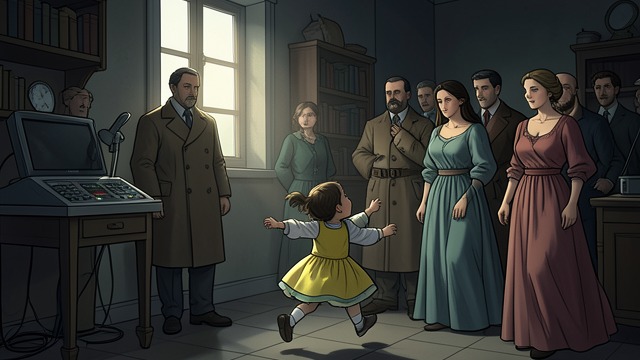
Imogene and her siblings take the principal roles, even though they are outsiders to the congregation. Their willingness is direct and unembarrassed.
A Challenge to Custom
The church must choose between honoring open participation and preserving comfortable expectations. The principle now has specific children attached to it.
Adults Argue for Exclusion

Welcome Meets Respectability
Practical Objections
Some adults say the Herdmans should hand out programs or should not play sacred characters. Others argue that children who do not attend the church should not take over.
A Conditional Welcome
These proposals reveal that the congregation’s welcome has limits when children are disruptive or unfamiliar. The dispute exposes a gap between doctrine and practice.
The Minister Invokes the Principle

The Saying Becomes a Defense
A Direct Reminder
Reverend Hopkins tells the congregation that Jesus meant all children, including the Herdmans. His intervention answers the effort to disqualify them through reputation.
A Decision Settled
The objections subside enough for rehearsals to begin. The principle does not promise that the children will behave perfectly; it requires the church to make room for them.
The Principle Tested on Stage
Inclusion Produces an Unplanned Gift
Children Participate as Themselves
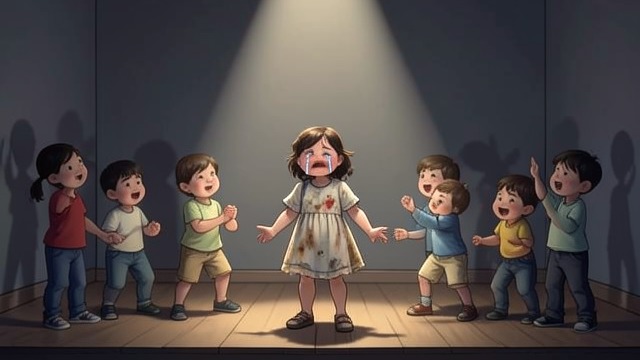
The Herdmans do not become polished performers, but they take part in the central scenes and offer their ham. Their presence changes the production without erasing their roughness.
A Community Receives the Result
The audience is moved by Imogene’s tears and the pageant’s humanity. Welcome proves capable of producing understanding that exclusion would have prevented.
When the congregation first hears objections
At the Sunday casting meeting
During the days after casting
After the complaints reach Reverend Hopkins
On Christmas pageant night
